





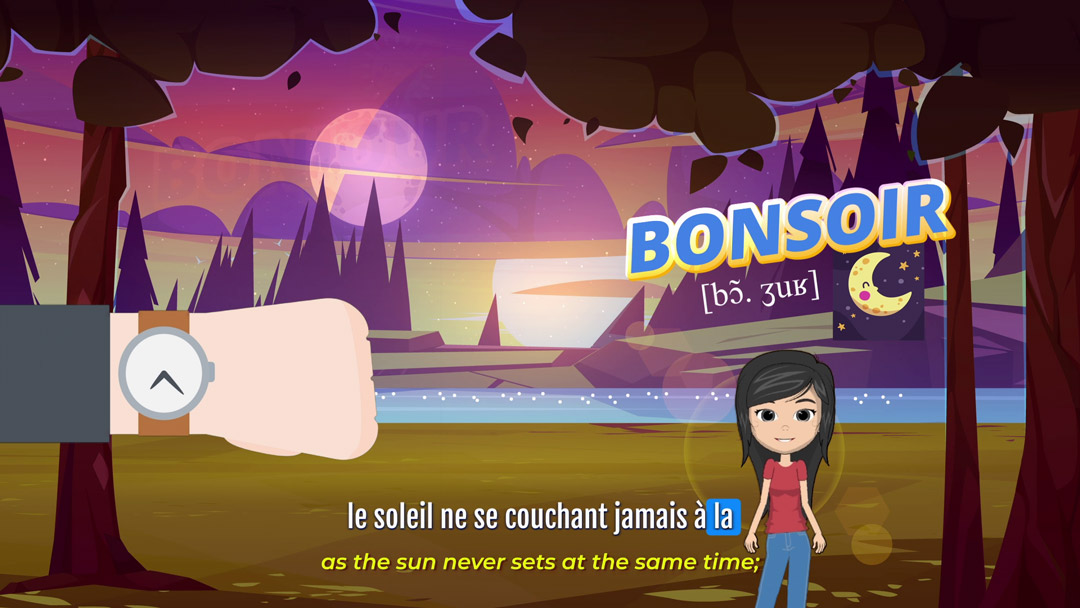
When should you use “BONSOIR” instead of “BONJOUR”?
In French, “bonjour” and “bonsoir” are two very common greetings, but their use depends mainly on the time of day. ⏰
Bonjour: from morning until late afternoon
“Bonjour” is used from early morning until late afternoon, generally until around 6 p.m.
It is the most common greeting in everyday life and is used in almost every situation: with strangers, at work, in stores, or among colleagues.
Examples:
- Bonjour, comment allez-vous ?
- Bonjour Madame, je voudrais un café.
- Bonjour tout le monde !
Bonsoir: starting in the evening
“Bonsoir” is used from early evening onward, often around 6 or 7 p.m., depending on the context and how light it is outside.
Unlike in English, “bonsoir” is also used to greet someone upon arrival, not just to say goodbye.
Examples:
- Bonsoir, vous avez réservé une table ?
- Bonsoir tout le monde !
- Bonsoir Madame.
A simple tip for learners
✔ Day → good morning
✔ Evening → good evening
If you arrive somewhere in the evening, say “Bonsoir”, even if you’re staying for a while.
A subtle cultural difference
In France, people tend to say “Bonsoir” fairly early on once it gets dark or when they arrive at an evening venue (restaurant, theater, event). 🌙
For example:
- 5 p.m. in winter → it’s already time to say “Bonsoir”
- 8 p.m. in the summer → some people are still saying “Bonjour”
So the rule depends on both the time of day and the mood of the day.