






🖐 How to say BONJOUR in French
“Bonjour” is the most common way to greet someone in France. It is used in everyday life in a formal and polite manner. The French are very attached to this friendly greeting, which serves as a social ritual. It is often accompanied by a smile—some more natural and warm than others—or even a wave if you are a particularly cheerful and warm person.
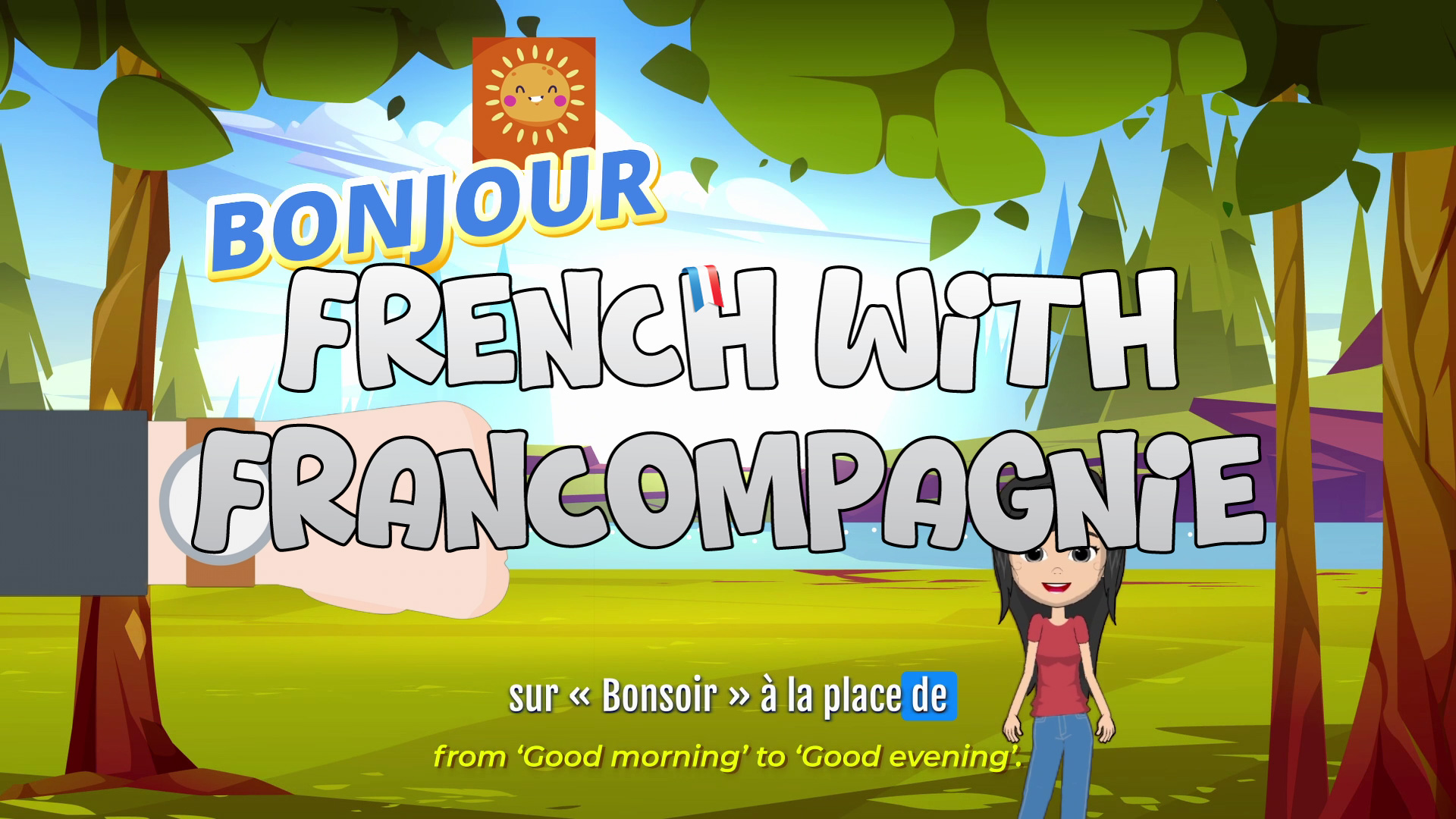
Different ways to say “HELLO” in French with Julie from Francompany. Always laid-back and in cartoon style!
Here is an educational chart for these French greetings.👋
| Expression | Type | Pronunciation (IPA) | English translation | When to use it | Helpful tip |
|---|---|---|---|---|---|
| bonjour | neutral/polite greeting | /bɔ̃.ʒuʁ/ | hello / good morning | Used from morning until late afternoon. | That’s the standard greeting in French, even with strangers. |
| bonsoir | neutral/polite greeting | /bɔ̃.swaʁ/ | good evening | Used in the evening, usually starting in the late afternoon. | We say good evening even when we arrive, not just to say goodbye. |
| salut | colloquial | /sa.ly/ | hi / bye | Among friends, close colleagues, or young people. | Can be used to say hello or goodbye. |
| coucou | very friendly / affectionate | /ku.ku/ | hi / hey | With close friends, children, or family. | A friendly or cute tone, rarely used in a formal context. |
A quick and helpful explanation for learners 📚
👋 “Bonjour” is the most common greeting in France. It is said:
- when entering a store
- when meeting someone
- even in an elevator
🌙 “Good evening” is used instead of “good morning” when it’s late in the day.
😊 “Salut” and “coucou” are informal:
- “Salut” is common among friends.
- “Coucou” is even more casual; it’s sometimes used with children or in messages.
Example sentences
Coucou, je suis là !
Bonjour, comment allez-vous ?
Bonsoir, vous avez passé une bonne journée ?
Salut, ça va ?